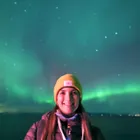
We were expecting a show and boy did it deliver.
Skywatchers around the world were treated to stunning auroras that surged far beyond their usual polar limits, lighting up mid-latitude skies during a severe G4 geomagnetic storm.
Northern lights were reported across mid-latitudes, with sightings stretching from Germany to the southwestern United States, including New Mexico, during a night of rapidly fluctuating geomagnetic conditions that fluctuated between G1, G2, G3 and G4 storm levels.
The display was triggered by the arrival of an exceptionally fast coronal mass ejection (CME) that struck Earth's magnetic field at around 2:38 p.m. EST (1938 GMT) on Jan. 19, when geomagnetic conditions first escalated to G4 (severe) storm levels, according to NOAA's Space Weather Prediction Center. The CME had blasted away from the sun just a day earlier, on Jan. 18, during a powerful X1.9 solar flare — giving it remarkably little time to cross the roughly 91 million miles (147 million kilometers) between the sun and Earth.
After the initial shock arrival, the passage of the CME itself kept Earth's magnetic field in a highly disturbed state for hours, producing repeated surges of auroral activity as storm levels rose and fell through the night, according to the U.K. Met Office.
We've gathered up some of the best photos from last night's aurora activity captured by skywatchers around the world.
Scott Mellis captured this beautiful image of the northern lights dancing over Covesea Lighthouse, Lossiemouth, Scotland, on Jan. 19.
"Wow, what a night it was last night with the sky erupting in colour," Mellis told Space.com in an email.

Photographer Greg Gage sent us these stunning views of the northern lights captured from Deming, New Mexico, at 32° latitude!


"I live in Sistersville, WV and that is usually where I catch aurora. However, I'm on a 2-week 'snowbird' getaway to Deming, NM," Gage told Space.com in an email.
"In WV I am at latitude 40°. The last thing I expected was to catch auroras this far south. But a G4 CME was able to make it this far south. Wow!!"
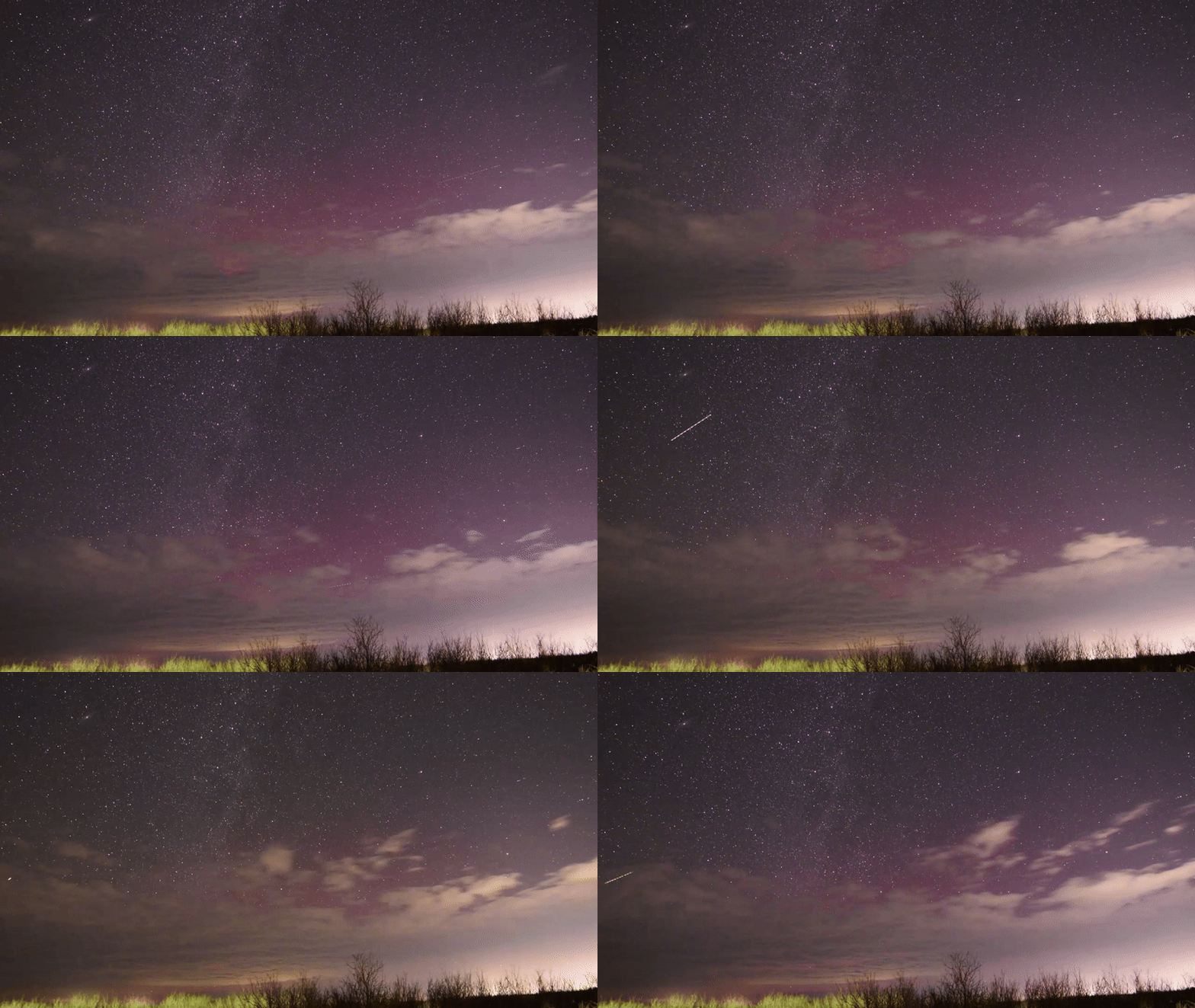
Photographer Miguel Marques (Marques Astronomy) captured this remarkable scene from Portugal at 40ºN on Jan. 19 around 10:30 p.m. local time.
The red aurora was visible to the naked eye, according to Marques.


Meanwhile, in Germany, the northern lights danced above the river Müggelspree. This stunning photo was captured by photographer Florian Gaertner.

In Romania, Sanda Buciuta braved the chilly temperatures to capture this delightful display on Jan. 19.
"For Romania, it is a rather rare phenomenon, especially the explosion of colors, red, green, including a tinge of purple," Buciuta told Space.com in an email.
"I was excited to observe this phenomenon. It was -9 degrees [Celsius] outside, quite cold, but it was well worth it," Buciuta added.

Auroras flooded the skies above the village of Abaujvar, Hungary, with vivid hues of red and green. The beautiful photograph was captured by photographer Robert Nemeti.

In France, photographer Jerome Gilles captured this eerie scene as rich magenta auroras filled the sky above Morbihan, Brittany.

Photographer Chi Shiyong had front row seats to an incredibly colorful display above Beiji Village, Mohe City, Heilongjiang Province, China.

Rich magenta hues fill the sky as distinct pillars also start to take form.


Adri van den Berg snapped this beautiful northern lights show on Jan. 19 from Rouveen, Overijssel, in the Netherlands.

Cloudy skies didn't stop photographer Lou Benoist from capturing this stunning image of the northern lights peaking through a gap in the clouds over the stunning cliffs of Etretat, France.

Meanwhile, in western France, photographer Oscar Chuberre captured this stunning image of the northern lights over Portsall.

In Germany, photographer Sascha Schuermann captured a dramatic scene unfolding in the skies above North Rhine-Westphalia.

Many skywatchers took to X to share their impressive shots of the aurora show.
Photographer Mathieu Rivrin captured a stunning timelapse of the northern lights dancing above the Côte de Granit Rose (the Pink Granite Coast), Brittany, France.
Aurores boréales sur la côte de granit rose - 20 janvier 2026#auroresboreales #bretagne pic.twitter.com/xeOsws6MmFJanuary 20, 2026
Aurora chaser Alex Masse captured a stunning view of tall aurora pillars from Kerwood, Ontario, Canada, at 10:55 p.m. local time.
As good as it got.1055pmKerwood, ON 42.89N#aurora pic.twitter.com/eZZl883GT0January 20, 2026
Amateur astrophotographer Damian shared some remarkable photos captured from Munich, south Germany!
"It was absolutely amazing, really unbelievable and unforgettable," Damian wrote in a post on X.
A little best of todays stunning aurora-show over Munich, South Germany! 😍🤩It was absolutely amazing, really unbelievable and unforgettable.#aurora #Polarlichter #München pic.twitter.com/g2xYDaN4s4January 20, 2026
Storm chaser Wouter van Bernebeek shared a beautiful photo of the northern lights dancing above Nijmegen, Netherlands, at around 10:20 p.m. local time.
Genieten van een intense noorderlichtshow! De kleuren waren opvallend fel: een 'dansende' groene band hing zelfs helemaal richting het zuiden. Ook tof om te zien dat zoveel mensen het #noorderlicht nu een keer zelf konden spotten 🌌Mijn eerste foto rond 22.20u vlakbij Nijmegen: pic.twitter.com/wIU1JpkuzPJanuary 20, 2026
While geomagnetic activity is expected to gradually ease, space weather forecasters say conditions remain unsettled — meaning there's still a chance the northern lights could make another appearance tonight if solar wind conditions cooperate.
So keep those camera batteries charged and aurora alerts switched on, we may not be done just yet.