





Researchers are calling for a moratorium on industrial exploitation of the moon, fearing that rapid development could cause irreversible environmental damage and destroy invaluable scientific material.
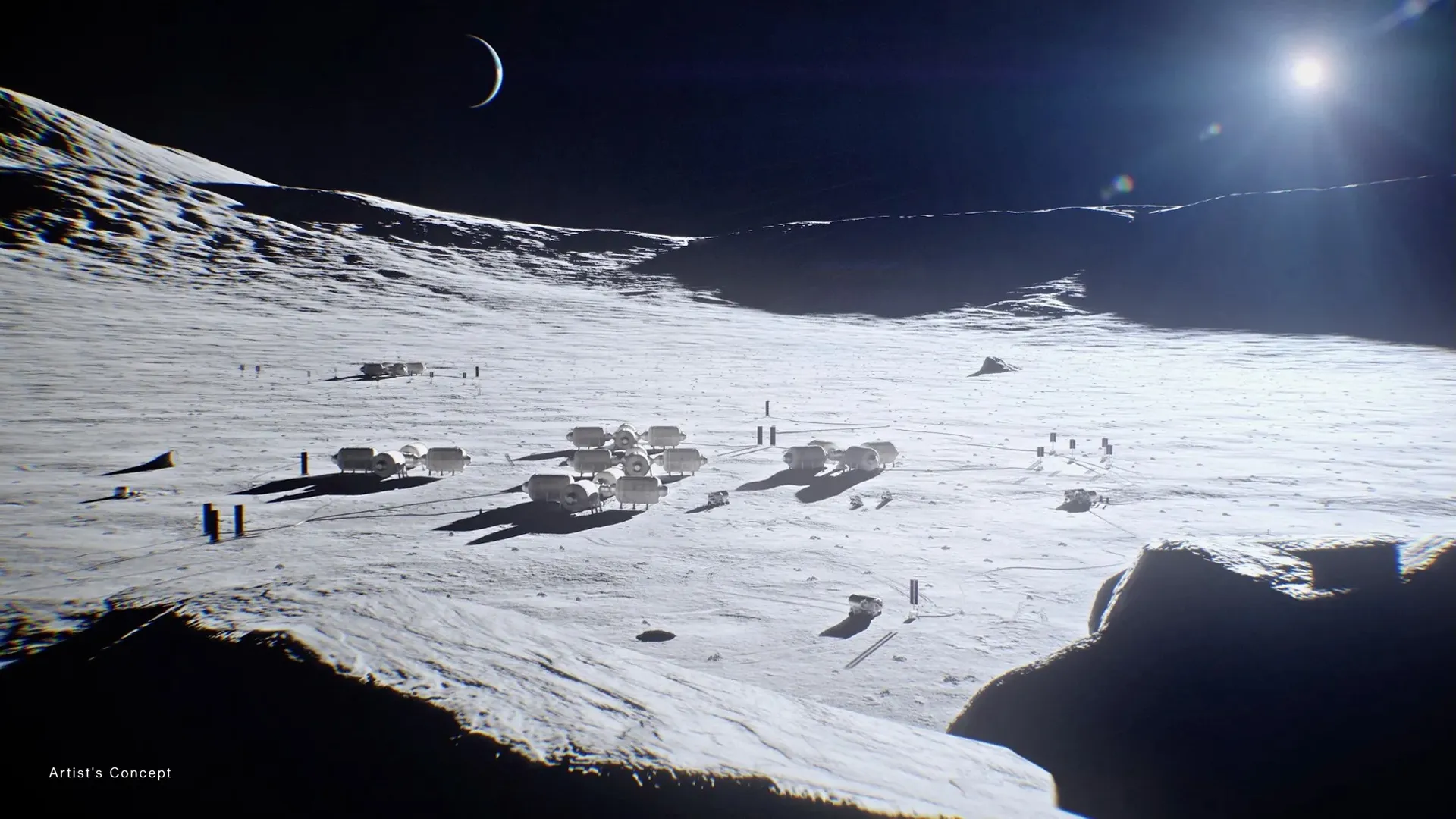
Both China and the U.S. are pushing forward with plans to establish permanent human settlements on the moon by the end of the next decade. Commercial players want to build businesses supporting these future explorers by mining for resources such as water, construction materials, industrial metals and rare earth minerals.
However, some scientists argue that a temporary ban on lunar industrialization is necessary to allow regulations to catch up and limit what can be allowed in order to prevent a moon rush from destroying the pristine lunar environment.
Two such researchers are Florian Rabitz, a professor of climate and technology governance at Vilnius University in Lithuania, and Xiao-Shan Yap, an assistant professor of Earth-space sustainability at Utrecht University in the Netherlands. In a piece published last month in the journal Global Environmental Politics, the pair call for "robust international regulations" and "broad and inclusive deliberation" to allow the global community to carefully consider the impact of economic activities on the moon.
In addition to the threat to the scientifically priceless lunar landscape, the researchers also object to the colonization of the moon by a small number of powerful players — namely China, the U.S. and their respective close allies.
"With the moon it's absolutely clear that whoever is doing the big infrastructure work is going to be asserting their position, including by defining their own exclusive territories," Rabitz said in a statement. "That shouldn't be the Wild West."
Rabitz pointed out that, although the United Nations' 1967 Outer Space Treaty prevents individual nations from appropriating the moon, Earth's natural satellite and its valuable resources are unlikely to remain truly neutral territory if its exploitation is going to be led by a small number of powerful nations.