


NASA's next great space telescope is almost ready to leave Earth.

Roman has spent the last several weeks undergoing its final launch preparations at KSC. Technicians loaded the observatory with 290 gallons (1,100 liters) of hydrazine fuel on July 25, then attached it to its payload adapter in early August.
Roman was recently encapsulated inside Falcon Heavy's payload fairing, and underwent a full launch-day dress rehearsal on Aug. 20. NASA, SpaceX and Roman mission managers then completed the mission's Flight Readiness Review on Aug. 21, formally clearing the observatory to begin its final launch preparations.
Next, the telescope, encapsulated in its payload fairings, will be transported to SpaceX's hangar at LC-39A, where it will be attached to Falcon Heavy rocket before the it rolls out to the pad for launch later this week.
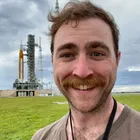
SpaceX seals Roman inside Falcon Heavy fairing ahead of Aug. 30 launch

NASA's Nancy Grace Roman Space Telescope is one step closer to launch. SpaceX has sealed the bus-sized observatory inside the payload fairing of its Falcon Heavy rocket, the company announced today (Aug. 24). Everything remains on course for Roman to lift off from NASA's Kennedy Space Center in Florida early on Sunday morning (Aug. 30).
After launch, it'll take Roman about 30 days to reach its distant destination — the sun-Earth Lagrange Point 2, which lies about 930,000 miles (1.5 million kilometers) from Earth in the direction of Mars. After a roughly three-month checkout period, the scope will start observing the heavens — hunting for exoplanets and shedding light on dark matter and dark energy, among other tasks.
Roman arrives at SpaceX hangar before launch

Roman is one step closer to space! NASA transported the new space telescope inside its rocket fairing from the Kennedy Space Center's Payload Hazardous Servicing Facility to SpaceX's hanger at Launch Complex-39A (LC-39A).
The trip occurred overnight on Aug. 25, traveling in a caravan of vehicles to one its last Earthly destinations. Next, Roman and its protective fairings will be mated to SpaceX's Falcon Heavy rocket and undergo final fit checks and tests before rolling out to the launch pad.
A Launch Readiness Review panel will be held by NASA and SpaceX on Friday (Aug. 28), to make a final determination for launch readiness. If everything goes according to plan, liftoff will proceed toward the scheduled 7:26 a.m. EDT (1126 GMT) target on Sunday (Aug. 30).
SpaceX shows off Roman's Falcon Heavy rocket ride

SpaceX just gave us some good looks at the rocket that will carry NASA's Nancy Grace Roman Space Telescope to the final frontier this weekend.
That launcher is a Falcon Heavy, whose first stage consists of three modified, strapped-together Falcon 9 boosters. In an X post today (Aug. 26), SpaceX showed off that trio, which are currently in the hangar at Launch Pad 39A at NASA's Kennedy Space Center in Florida. The Falcon Heavy is scheduled to launch Roman — which will hunt for exoplanets and shed light on mysterious dark matter and dark energy — from Pad 39A on Sunday (Aug. 30) at 7:26 a.m. EDT (1126 GMT). You can watch the highly anticipated liftoff here at Space.com.
T-2 days until Roman launches to space

It is now under 48 hours until the scheduled launch of NASA's Roman Space Telescope. Liftoff from Launch Complex-39A is planned for Sunday (Aug. 30) at 7:26 a.m. EDT (1126 GMT).
A SpaceX Falcon Heavy rocket will deliver Roman to Earth-Sun Lagrange point-2, a stationary sweet spot about 930,000 miles away that will keep the satellite in a persistant orbit on the side of Earth opposite the sun.
Weather Sunday morning is leaning toward favorable launch conditions, with a small chance of showers or thunderstorms during the 7 a.m. (1100 GMT) hour. Clouds and lightning will be the primary weather concerns, but conditions are expected to deteriorate more later in the day, giving Roman’s early-morning attempt a better shot of getting of the ground.
If weather conditions worsen or Sunday's launch is delayed, another window opens Monday (Aug. 31) at 7:22 a.m. EDT (1122 GMT).
Roman is go for launch!
NASA’s Nancy Grace Roman Space Telescope is officially "go" for launch! NASA made the announcement this afternoon (Aug. 28), after wrapping up the mission's Launch Readiness Review at Kennedy Space Center (KSC) in Florida.
SpaceX was part of that review, because Roman will lift off atop one of the company's Falcon Heavy rockets. Launch is scheduled to occur on Sunday (Aug. 30) at 7:26 a.m. EDT (1126 GMT) from KSC's Launch Complex-39A. You can watch it all live here at Space.com when the time comes.
Roman and Falcon Heavy standing on the launch pad

CAPE CANAVERAL, Fla — With less than 24 until launch, SpaceX has raised Falcon Heavy with NASA's Roman Space Telescope at Launch Complex-39A ahead of tomorrow's 7:26 a.m. EDT (1126 GMT).
Today, NASA will host a handful of press conferences and interviews leading up to the mission. At 9 a.m. EDT (1300 GMT), members of Romans' science team will provide a mission overview to discuss the telescope's instruments and discoveries ahead. A prelaunch press briefing will take place at 10:30 a.m. EDT (1430 GMT), which will provide the most up-to-date weather predictions for tomorrow's liftoff, as well as a status update on the rocket's progress in reaching the pad.
Both briefings will stream live on the Space.com homepage, as well as directly on NASA's website. Stay tuned for more updates as we track Roman's last day before launch!
T-24 Hours! Roman is slated to liftoff tomorrow at 7:26 a.m. EDT!NASA will host a Science Briefing today at 9:00 a.m. EDT to discuss the Roman Space Telescope mission followed by a Prelaunch News Conference at 10:30 a.m. EDT to discuss tomorrow morning's launch! pic.twitter.com/ASJs4EdQM9August 29, 2026
Counting down to launch for Roman

CAPE CANAVERAL, Fla — After years of anticipation, we have finally arrived at launch day for NASA's Nancy Grace Roman Space Telescope. Today (Aug. 30) at 7:26 a.m. EDT (1126 GMT), Roman is set to lift off from Launch Complex-39A at NASA's Kennedy Space Center in Florida.
The mission will launch atop a SpaceX Falcon Heavy rocket, sending NASA's flagship astronomy telescope out to Lagrange point 2 (L2), a stable orbital point approximately 1 million miles (1.5 million kilometers) out from Earth.
As of yesterday (Aug. 29), there is still a 50% chance of favorable launch conditions. But at the launch site, everyone has their fingers crossed for a successful liftoff.
Roman is 70% go for launch!

CAPE CANAVERAL, Fla — NASA's Nancy Grace Roman Space Telescope is now 70% go for launch this morning (Aug. 30). The observatory is on the launch pad sitting atop a SpaceX Falcon Heavy rocket and is set for liftoff in just under an hour at 7:26 a.m. EDT (1126 GMT) from Launch Complex-39A at NASA's Kennedy Space Center in Florida.
Yesterday, a cloudy weather forecast pushed the launch probability to 50%. But thankfully, this morning the clouds have started to part and this probability has improved to 70%.
SpaceX begins fueling Falcon Heavy rocket for Roman launch

SpaceX is now fueling the first stage and side boosters of the Falcon Heavy rocket with the liquid RP-1 (rocket-grade kerosene) propellant it will need for launch. A report minutes ago confirmed that liquid oxygen, an oxidizer, is also beginning to be loaded.
Weather concerns seem to be easing, with forecasts now predicting 70% "go" for launch.

SpaceX now fueling 2nd stage of Falcon Heavy rocket for Roman launch

Just minutes ago, SpaceX began fueling the second stage of its Falcon Heavy rocket with the RP-1 fuel for today's launch.
All systems continue to perform well and there are no constraints for launch.
What is clear is that scientists are eagerly awaiting the Roman Space Telescope's observations of the universe. The space telescope is expected to be prolific.
"The scope is extraordinary," Roman senior scientist Julie Mcenery said during live commentary. "We will do a survey of our own Milky Way galaxy and find 20 billion stars. That would make it the largest catalog of astronomical objects that's ever been produced."
We are now 30 minutes to launch.
Who was Nancy Grace Roman, namesake of NASA's Roman Space Telescope?
NASA's Roman Space Telescope is now 10 minutes from launch. So let's take a minute to talk about its namesake, NASA's 1st chief astronomer Nancy Grace Roman. You have her to thank for the Hubble Space Telescope.
Here's why she's called the "Mother of Hubble."

Falcon Heavy ready for Roman Space Telescope launch
The SpaceX Falcon Heavy rocket carrying NASA's Nancy Grace Roman Space Telescope is just about fully fueled for launch, with engine chilldown underway.
Liftoff remains on track for 7:26 a.m. EDT (1126 GMT). From liftoff to deployment, the entire flight should last about 31 minutes, 31 seconds.
LIFTOFF! SpaceX Falcon Heavy launches Roman Space Telescope for NASA

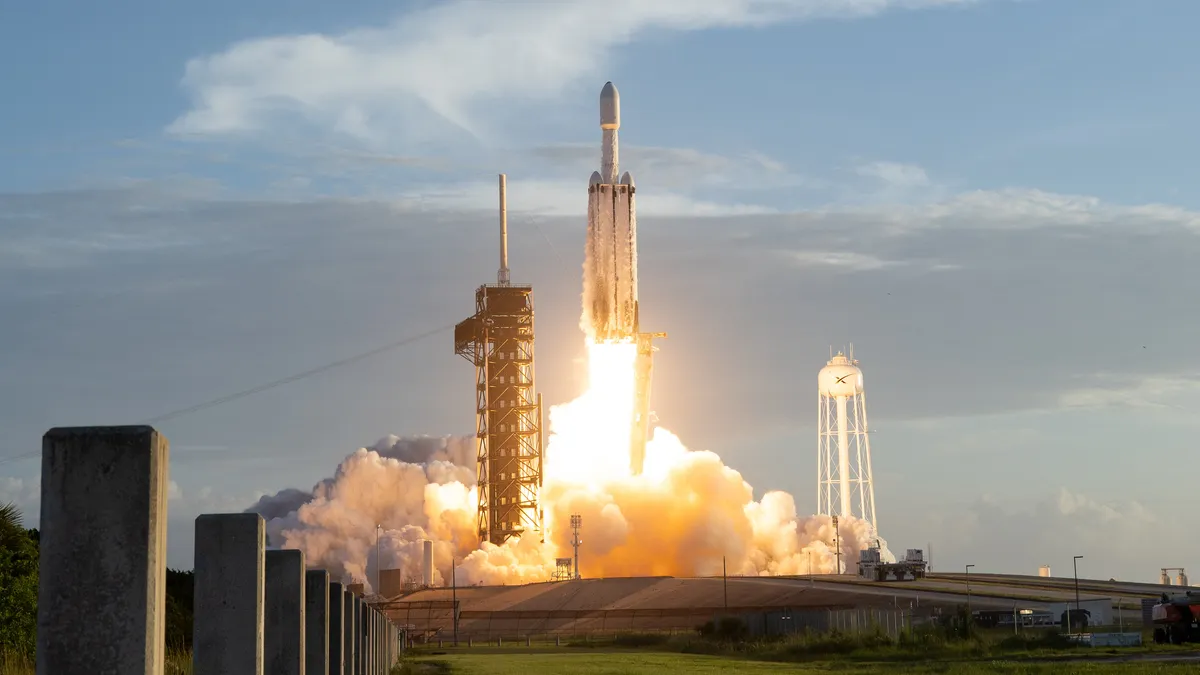
LIFTOFF! SpaceX's triple-core Falcon Heavy rocket just launched from Pad 39A of NASA's Kennedy Space Center to carry the Roman Space Telescope into orbit.
This ascent should last just over 8 minutes, with the twin side boosters returning to Earth after separation for a landing at the Cape Canaveral Space Force Station.
Stage Separation! Falcon Heavy boosters to return to Earth

Just over 4 minutes into flight for NASA's Roman Space Telescope, and a lot of things have happened in succession.
The twin side boosters of SpaceX's Falcon Heavy rocket separated as planned and performed their boost back burns to return to the Earth for a landing at the Cape Canaveral Space Forcce Station. The core first stage also separated from the second stage. It is being discarded on this flight.
The nose cone payload fairing also separated as the upper stage fired as planned.
Roman Space Telescope reaches initial orbit on SpaceX Falcon Heavy
SpaceX Falcon Heavy rocket has successfully reached orbit with the Roman Space Telescope.
The flight is now in a coast phase to prepare for final deployment about 31 minutes after launch (about 7:57 a.m. EDT, or 1157 GMT).
Both of the twin Falcon Heavy side boosters did land as planned, though SpaceX and NASA's pad video showed only one of the landings.
Space Falcon Heavy aces final burn for Roman Space Telescope launch
The SpaceX Falcon Heavy rocket carrying NASA's Roman Space Telescope just fired its engine for a second burn to refine its orbit ahead of spacecraft deployment.
"Nominal orbit insertion," SpaceX flight controllers reported.
This will be the final event before the Roman Space Telescope is released into orbit. Payload deployment is minutes away.
Roman Space Telescope deployed!
NASA's Nancy Grace Roman Space Telescope is on its way to Lagrange Point 2 after a succesful deployment from the Falcon Heavy upper stage. Our wrap story will be posted shortly. A post-launch press conference is scheduled for 9:30 a.m. EDT (1330 GMT). We'll showcase that live here at start time.
Roman separated from the Falcon Heavy on time at 7:57 a.m. EDT (1157 GMT), 31 minutes after launch, and will now begin commissioning its systems. That includes deploying its solar panels and preparing for a mid-course correction burn to reach L2, about 1 million miles from Earth opposite the sun.
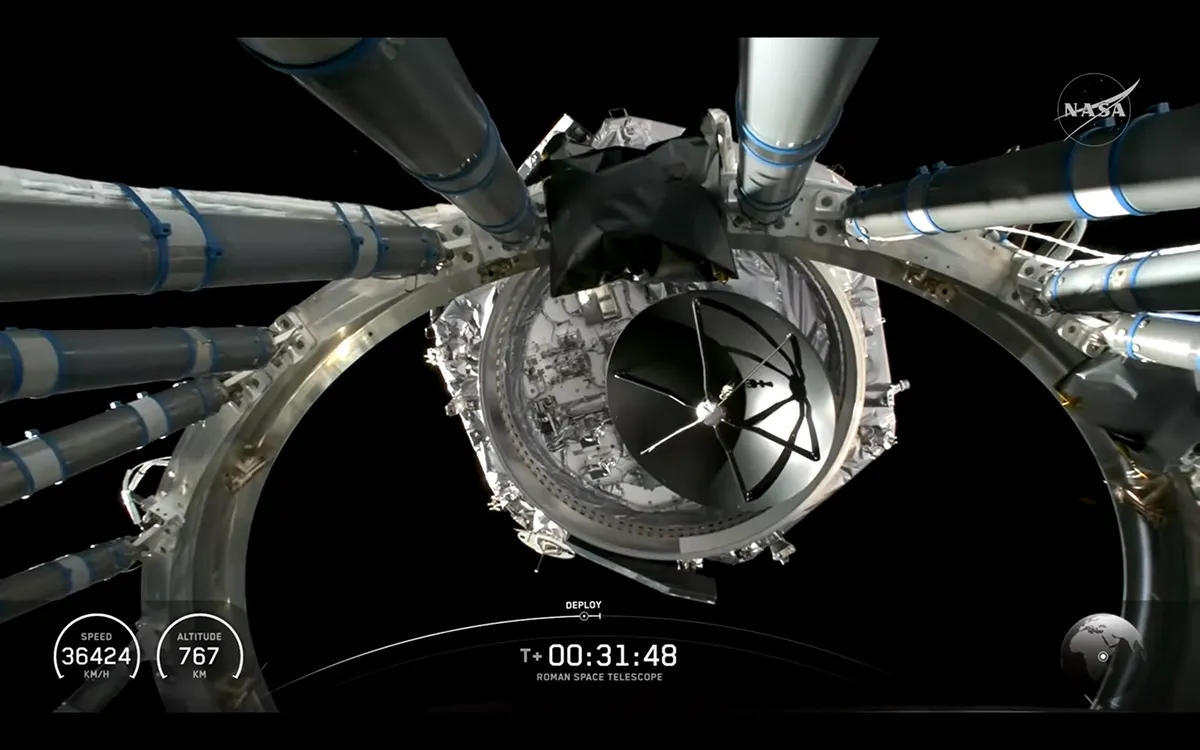
NASA expected to spend the next few weeks on commissioning Roman, essentially making sure all its systems work, then spend the next few months ensuring it is ready for its science mission. The first images are expected in January 2027.
Each Roman Space Telescope will have 300 million pixels, and NASA just launched an Adopt a Pixel campaign to let you sign up to "adopt" one for yourself. You can learn more about that here: https://science.nasa.gov/mission/roman-space-telescope/adopt-a-pixel/
Thank you all so much for joining us for our live launch coverage!
Relive the Roman Space Telescope launch ahead of press conference
As we wait for NASA's post-launch press conference for the Roman Space Telescope (that's set for 9:30 a.m. EDT (1330 GMT), let's take a look back at the stunning liftoff for the mission.
You can see video of the launch above, but our Spaceflight Writer Josh Dinner captured this stunning view of the SpaceX Falcon Heavy rocket carrying Roman as it crossed the sun during its ascent. Check it out!

See our full Roman Space Telescope launch wrap, with images and video.
NASA post-launch briefing for Roman Space Telescope begins
NASA's post-launch briefing on the successsful launch of the Roman Space Telescope is underway. You can watch it above. Read our full launch wrap, with video and images. Here's who is speaking today:
- NASA Administrator Jared Isaacman
- Nicky Fox, associate administrator, Science Mission Directorate, NASA Headquarters
- Jackie Townsend, Roman telescope project manager, NASA Goddard
- Julie McEnery, Roman telescope senior project scientist, NASA Goddard
- Denton Gibson, launch director, NASA’s Launch Services Program, NASA Kennedy
NASA, SpaceX celebrate & Trump calls in live during post-launch press conference
NASA's post-launch press conference has ended and it was not without some suprises. (Read our full launch wrap, with video and images.)
NASA chief Jared Isaacman hailed the Roman Space Telescope mission team, as well as SpaceX's Falcon Heavy launch team, for smooth and successful launch.
"The telescope will provide a vast new atlas of the universe, potentially revealing more than 100,000 new exoplanets through its various surveys," Isaacman said. "So Roman will help us, as you've already heard, study dark matter and dark energy mysteries that may change our fundamental understanding of the universe."



Space.com Astronomy Editor Monisha Ravisetti wrapped the press conference with one last question about the science Roman could do.
In the middle of the press conference, Isaacman's phone rang and he quickly left the stage to take the call. It was from President Donald Trump.
"The president's excited about Roman," Isaacman said as he ran off stage.
Isaacman returned a bit later and put Trump on speaker phone.
"I just want to thank everybody and congratulate you," Trump said. "Boy, it looked beautiful on television."
That will be a wrap for our live launch coverage. Thanks for joining us and we'll see you at the next one!
Roman aces critical engine burn, fine-tunes trajectory

NASA's Nancy Grace Roman Space Telescope performed an important 3.5-minute engine burn today (Aug. 31), fine-tuning its trajectory toward its distant destination. It was the first of two planned burns designed to get Roman to the sun-Earth Lagrange Point 2 (L2), a gravitationally stable point that lies about 930,000 miles (1.5 million kilometers) from Earth.
"The other, if needed, is planned for later this week, and Roman’s orbital insertion will take place approximately 100 days post-launch," NASA officials wrote in an update today. "Once in orbit around L2, Roman will only require periodic station-keeping burns roughly every 28 days."
Roman finding its space legs
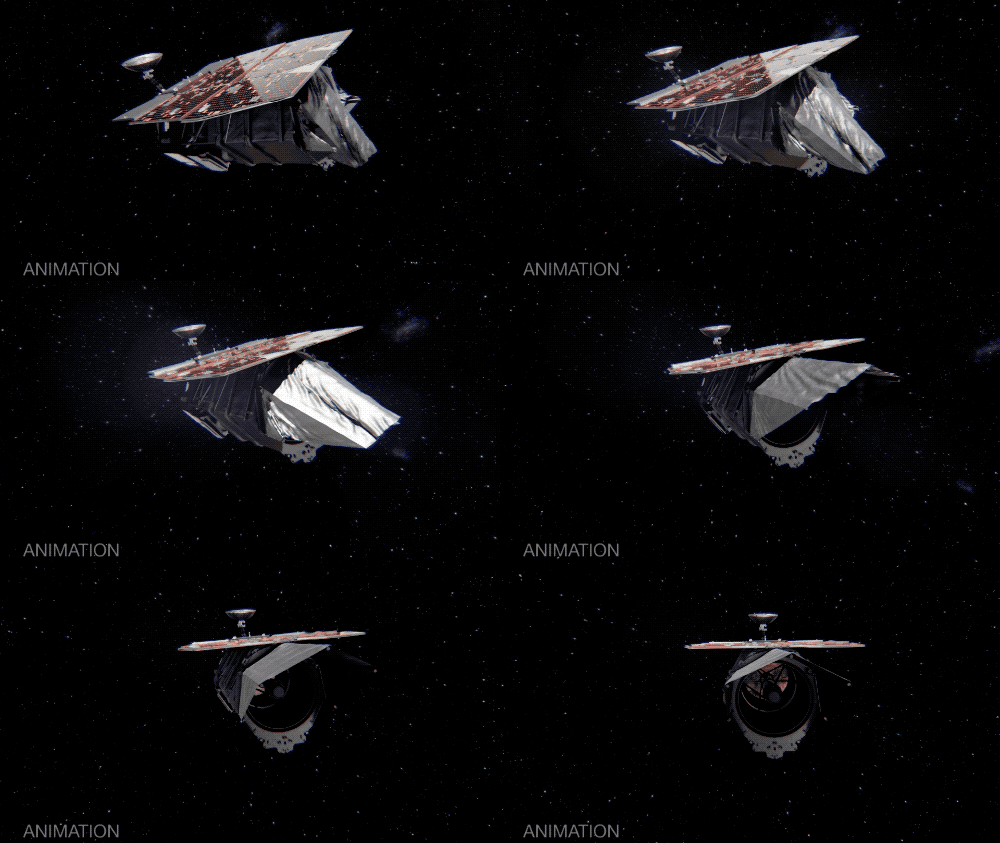
As it approaches the end of its first week in space, NASA's Roman Space Telescope is being preppared to begin its operational mission.
Roman, which launched on a SpaceX Falcon Heavy rocket on Aug. 30, and has already deployed its solar panels, high gain antenna, and deployable aperture cover, the large sunshade designed to keep stray bits of light from the telescope's view.
Mission teams also began the power-on process for Roman's Coronograph Instrument on Tuesday morning (Sep. 1). Now successfully up and running, the instrument will spend several weeks under the scrutiny of Roman's technicians as they perform tests to calibrate the corognograph before beginning science operations.