




Our time on our "space mission" underwater was coming to an end, and I felt like what I imagine an astronaut on the International Space Station (ISS) must feel before returning to Earth. On one hand, you are excited to return to your home and loved ones, as well as to fresh food and normal hygiene. On the other, you know you will miss your crew and the incredible experience of being in space.
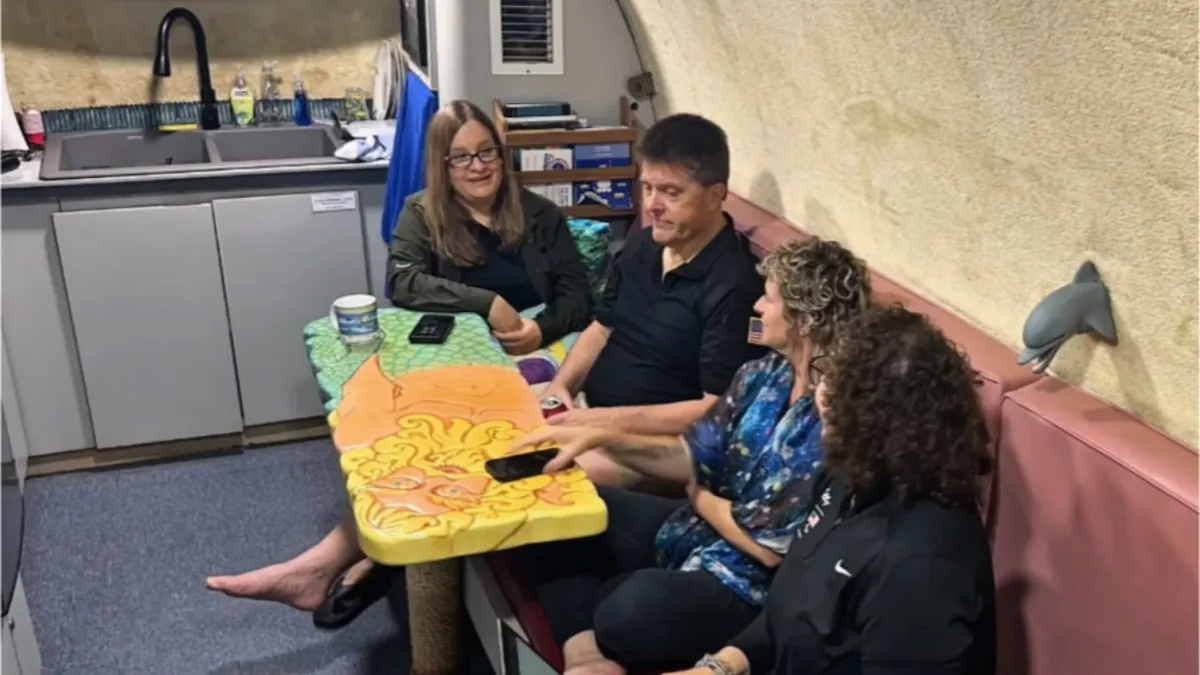
While my SEA STAR crew and I had not left Earth during our mission, we were separated from the surface of our home planet for five days. All we saw was a green alien water world surrounding us. We did this to live and work like astronauts on the ISS. Instead of dealing with the challenges of space that astronauts face, we problem-solved sometimes equally difficult issues that divers have to manage when performing research in sea water.
Our "wet ISS" was the Jules' Undersea Lab, which is located near Key Largo, Florida, at 22 feet (7 meters) underwater. By the end of our mission, we had all officially become aquanauts. An aquanaut is an undersea explorer who remains underwater for more than 24 hours, without returning to the surface, in a state known as saturation.
In this sense, saturation refers to the physiological condition achieved by a person who breathes underwater long enough for the body's tissues to absorb the maximum possible amount of inert gas (like nitrogen), for a specific depth and pressure. The term aquanaut derives from the Latin word "aqua" (water) and the Greek "nautes" (sailor).
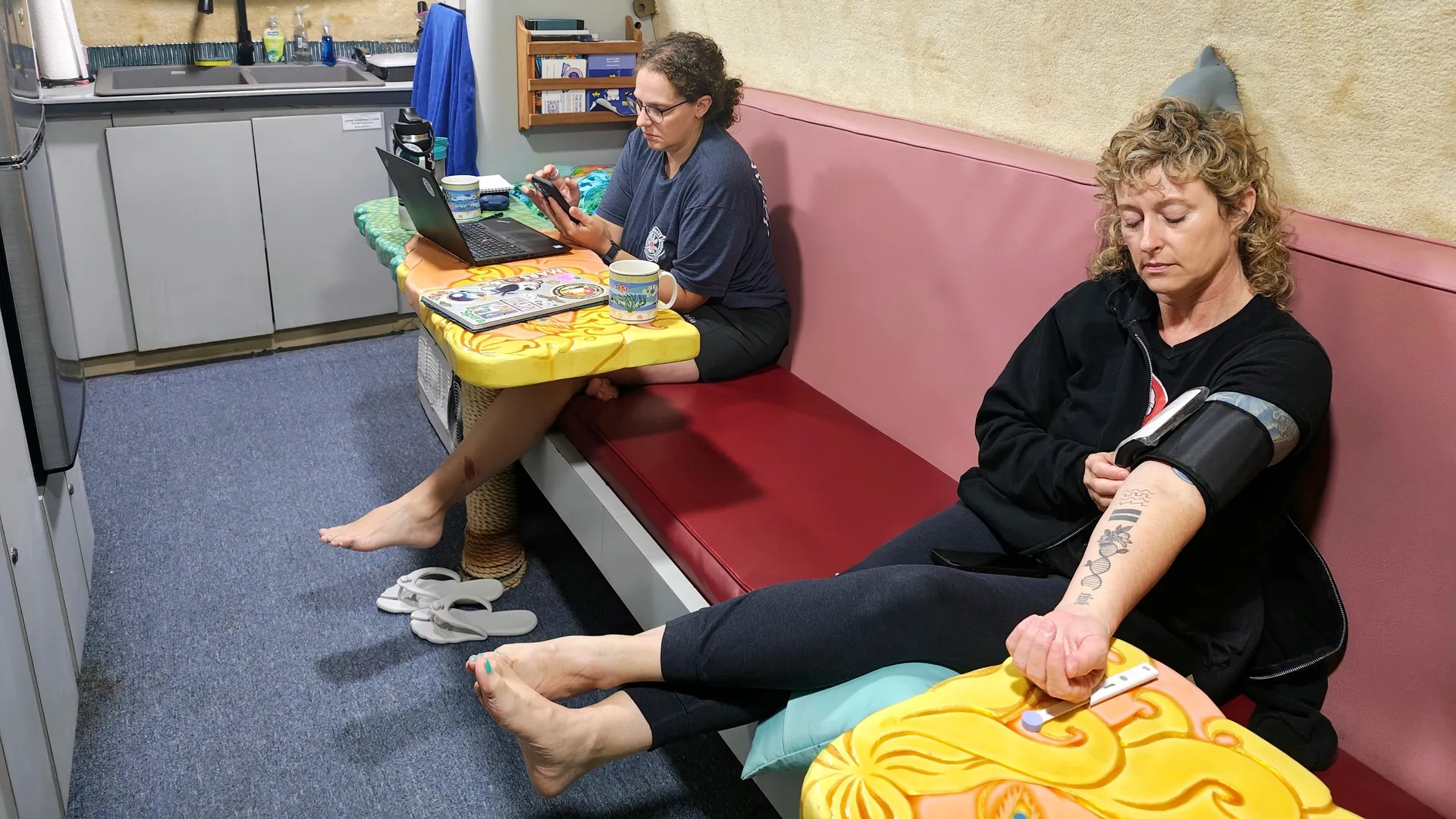
There were a lot of things I wasn't going to miss about being an aquanaut. They included the constant loud noises our life support systems made to keep us alive underwater, as well as bathroom plumbing issues and some health concerns linked to living under pressure. We also had to be very careful when performing our "spacewalks" (scuba dives), due to the low visibility of the environment around us.
Nonetheless, I experienced a sort of "underview effect" during this mission. Most astronauts report experiencing an "overview effect" after seeing our whole planet from space, which usually makes them value our unique planet even more. I felt a similar thing when I saw the sun's rays come through the water. I couldn't reach them, but I enjoyed them from afar. My everyday life felt so close, yet so far away. It gave me both a feeling of longing and more determination to take even more care of our home world than before.
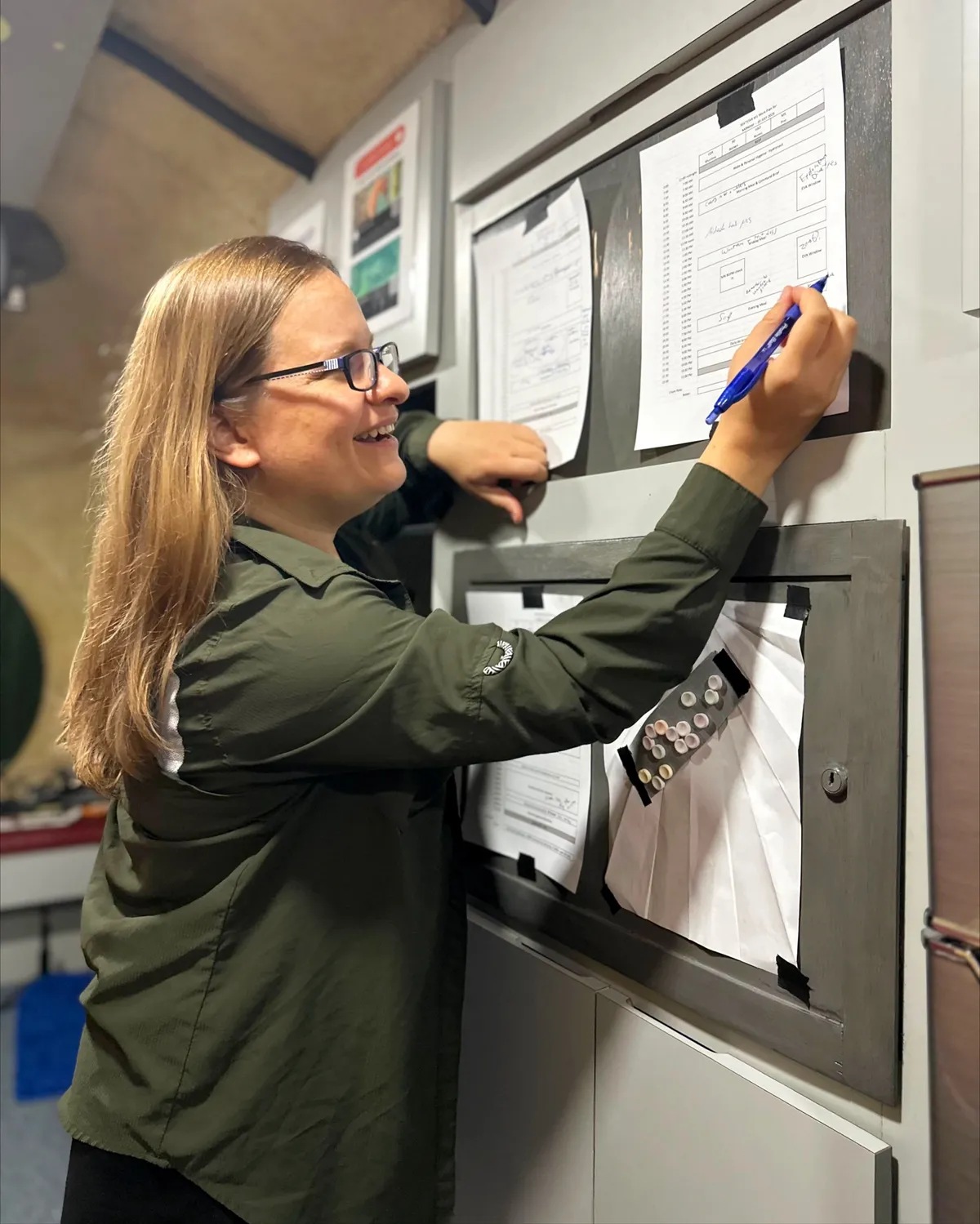
I'm grateful that we were able to perform all of the different scientific projects we planned for our mission. As the Commander of the crew, I usually have my work cut out for me managing the crew and overseeing their research projects, as had been the case for most of the 40 simulated space missions that I led previously. Fortunately, this time my crew was made up of experienced analog astronauts and divers, so the mission was mostly smooth sailing.
The research we chose for this mission was relevant for long-duration space missions. Since we can only send a small number of astronauts to the ISS with a limited number of research activities to perform, underwater stations provide us with a valuable way to conduct analog, or simulated, space missions instead. We also performed some environmental conservation work using a type of underwater vacuum device to help protect the nature around the Jules' Undersea Lab.
My scientific project was focused on studying whether our cognitive abilities and reaction times changed under pressure. This study is part of my collaboration with the Center for Hyperbaric Medicine, Faculty of Medicine of the University of Ostrava and City Hospital Ostrava in the Czech Republic. The whole crew definitely felt like their response times to these tests were slower during the mission than before it.
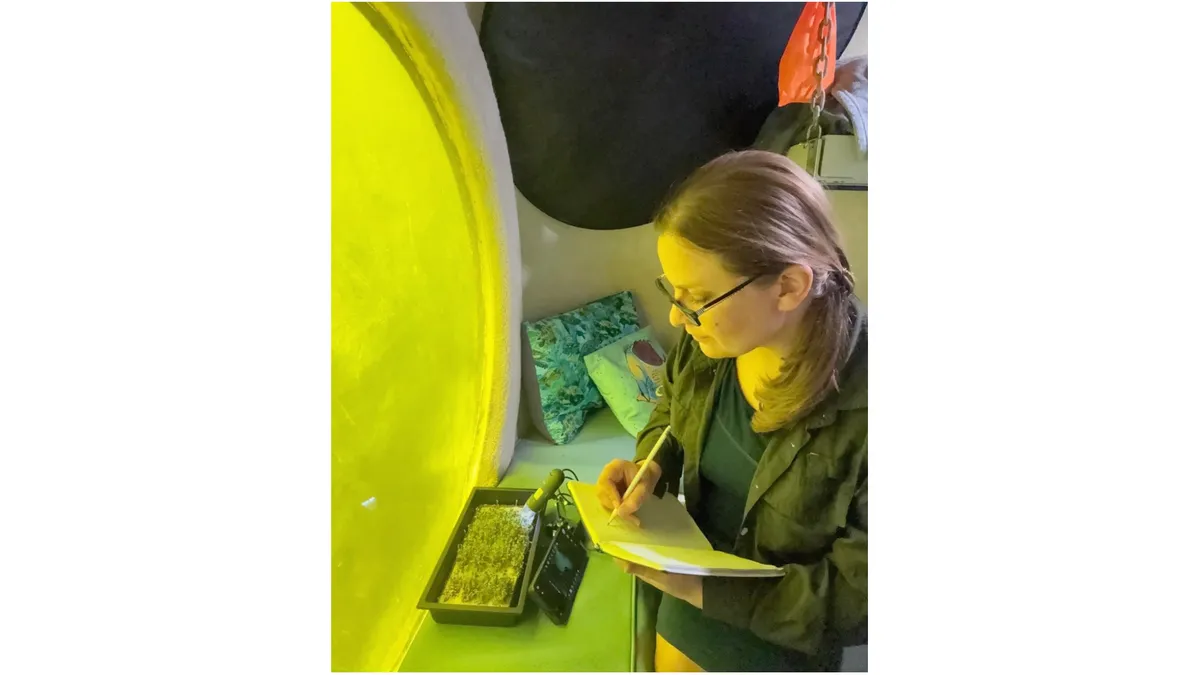
We were also interested in seeing how microgreens seeds were affected by the changes in pressure. Our Health & Safety Officer, Dr. Brandy Nunez, grew some of our kale and super salad mix before we started our mission, while other seeds started their growth journey underwater. All seeds were transferred to our underwater station using two varied pressure settings (gradual and sudden pressure release during their descent). After we harvested them, we could see that the latter types of seeds did indeed experience some barotrauma (damage caused by the sudden increase in air pressure).
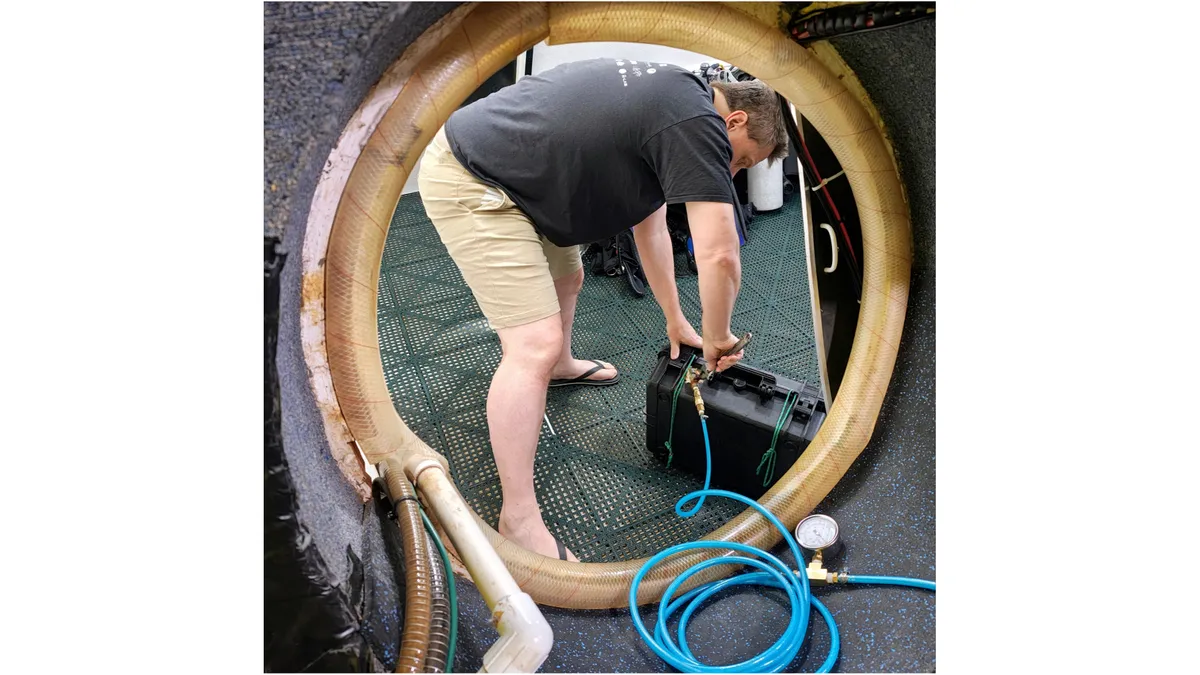
Executive Officer Paul Bakken's work was related to managing the internal pressure of logistical transfer containers when they are exposed to significant environmental changes in pressure. The fourth crewmember, Mission Specialist Jenn Pint, worked with Interstellar Performance Labs to develop a taxonomy for analyzing environmental and crew interaction factors during simulated space missions.
On top of these projects, we also performed neutral buoyancy experiments during our underwater spacewalks, as well as the testing of environmental sensors developed by high school and university students in Slovakia. The sensors provided important supplemental information to the cognitive study about our simulated space habitat's living conditions.
Just like astronauts on the ISS, we dedicated some of our time to outreach and educational work, too. In our case, we called Cosmic Region, a simulated space station in Slovakia, and gave the team there a tour of our underwater habitat. My crewmembers kindly went into the water at that time and performed a spacewalk to show what our work during the mission was like.
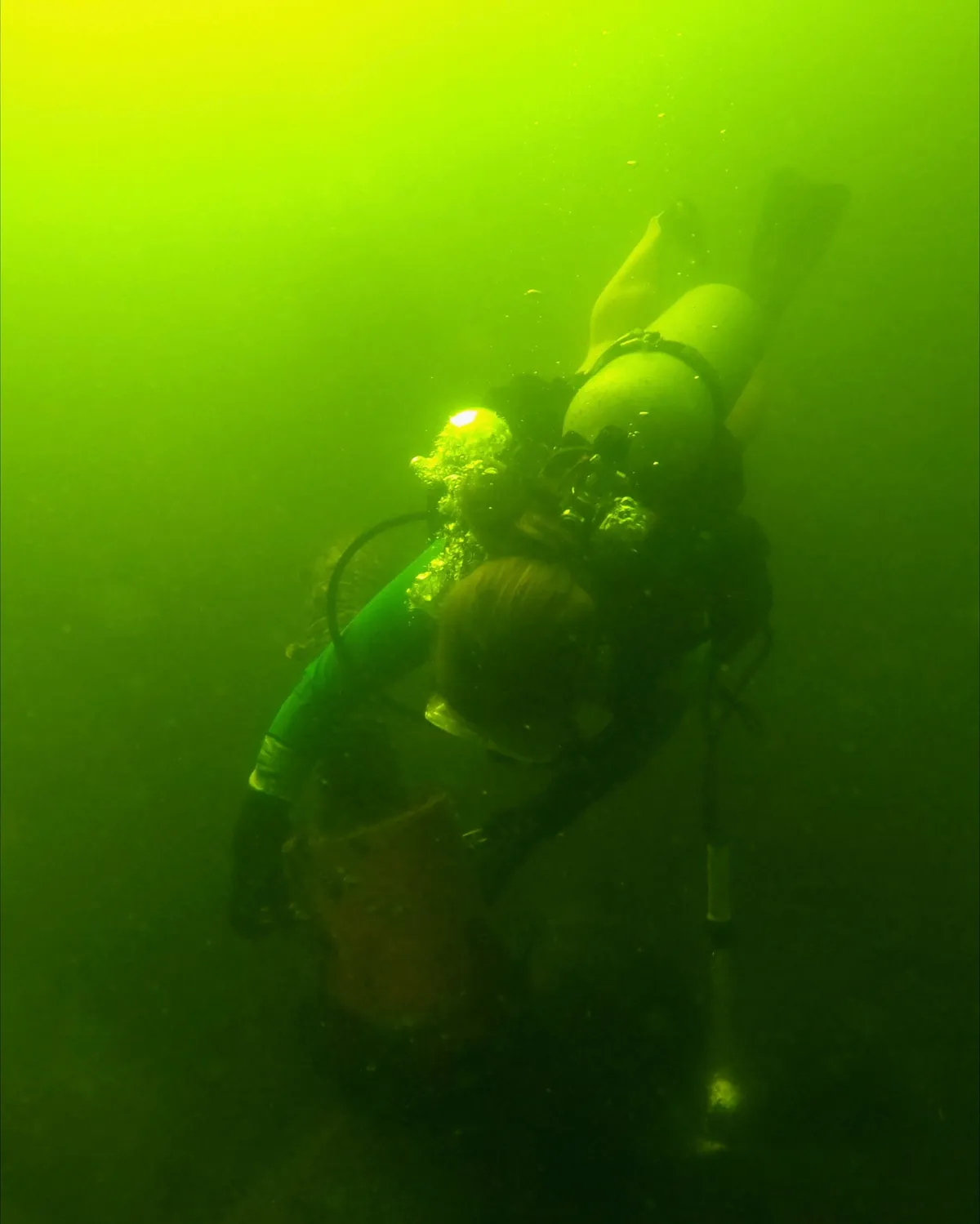
As I put on my "spacesuit" (scuba diving gear) one last time, I breathed the stuffy undersea air once more and then dove out to return to "Earth." My crewmembers and I then took a long detour around the lagoon around us to help our bodies adjust to lower pressures. Even though we were only 22 feet underwater, there was still a small risk of decompression-related problems that aquanauts can face after living under saturation for some time. The final step was to breach the surface at long last. That's when we all enjoyed breathing fresh air again and feeling the sun on our faces, though the temperature in Florida made us quickly hide away from it again 😉.
You can follow Dr. Michaela Musilova at her website and on social media: @astro_michaela (Instagram, TikTok and Threads), @Dr. Michaela Musilova (Facebook) and @astro-michaela.bsky.social (Bluesky).
