SpaceX launched a reconnaissance mission for the U.S. government on Thursday night (Oct. 1), the third liftoff for the company in less than 13 hours.
A SpaceX Falcon Heavy rocket lifted off from NASA’s Kennedy Space Center in Florida on Thursday at 11:54 p.m. EDT (0354 GMT on Oct. 2), on a mission for the U.S. National Reconnaissance Office (NRO) called NROL-97.
The launch rounded out a tripleheader for SpaceX, which also sent the Crew-13 astronaut mission to the International Space Station on Thursday morning and lofted the 130-satellite Transporter-18 rideshare flight that afternoon. Both of those earlier missions flew on Falcon 9 rockets.
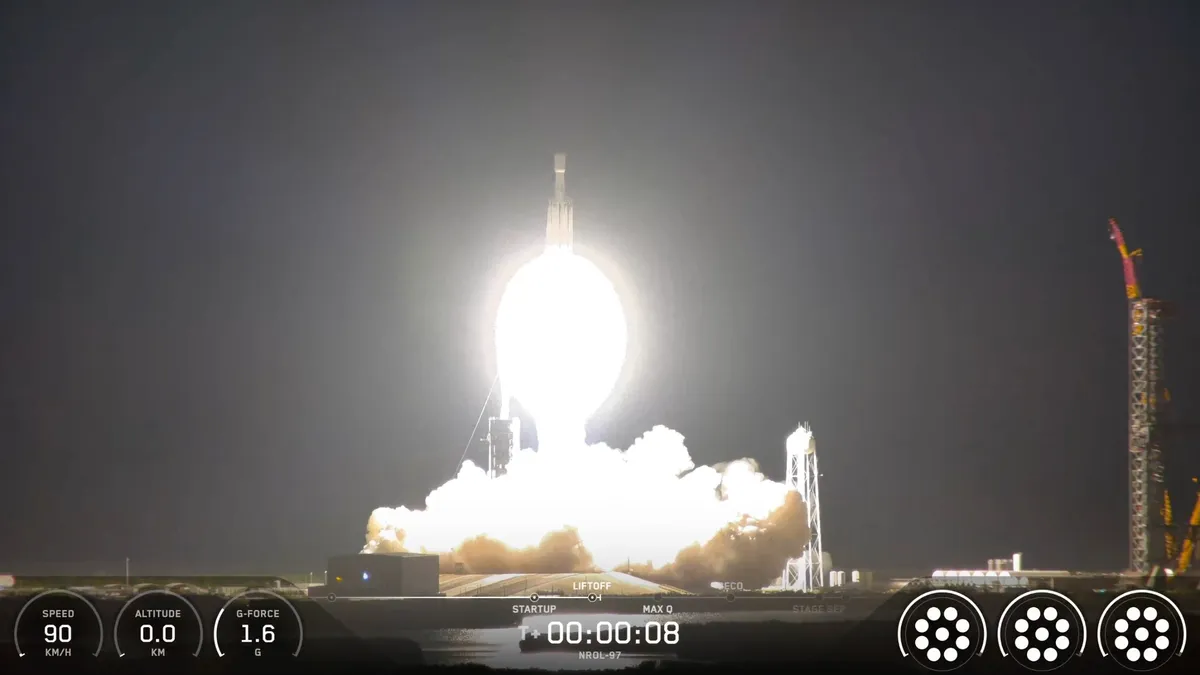
SpaceX has launched three missions in such a short timeframe just once before — in March 2025, when the company sent up three Falcon 9 rockets in a 12.5-hour span.
The Falcon Heavy consists of three modified, strapped-together first stages of the workhorse Falcon 9. The heavy lifter debuted in February 2018 and now has 14 flights under its belt to date, all of them successful (provided NROL-97 goes to plan).
NROL-97 is the first Falcon Heavy mission for the NRO, which operates the United States' fleet of spy satellites. We don't know much about NROL-97, which isn't surprising; NRO missions tend to be classified. But the fact that a Falcon Heavy was the rocket of choice suggests that the payload(s) that went up on Thursday night are quite heavy, and/or are headed for a relatively distant destination. (SpaceX didn't tell us what orbit the Falcon Heavy targeted.)
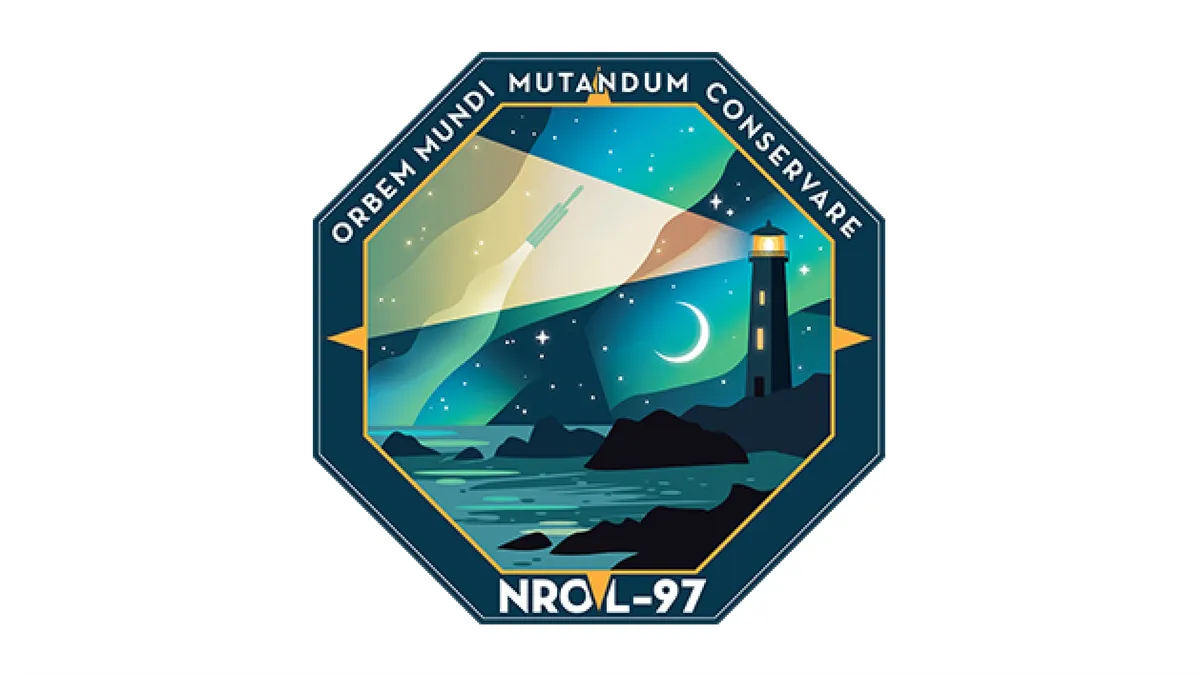
The NROL-97 mission patch, for what it's worth, features the phrase "Orbem mundi mutandum conservare," which is Latin for "to preserve a changing world" or "to preserve the world by transforming it." The emblem also memorializes the lives lost during the terrorist attacks of Sept. 11, 2001.
"The lighthouse characterizes enduring strength and the ability to provide information to those in need, even in difficult times," NRO officials wrote in a description of the patch. "The endpoints of the light beam align to the locations of 9 and 11 on a clock face in honor of the 25th anniversary of 9/11. Four prominent stars represent the four aircraft lost on 9/11, and the moon phase is shown as it appeared on September 11, 2026."
The launch webcast didn't shed much light on NROL-97. At the request of the NRO, it ended shortly after the Falcon Heavy's two side boosters come back to Earth for a landing, which occurred at Florida's Cape Canaveral Space Force Station a little less than eight minutes after liftoff.
NROL-97 was the second and fourth flight for those two boosters, respectively, according to SpaceX's mission page. The Falcon Heavy's central booster was not recovered.
SpaceX also launched the 14th test flight of its next-gen Starship megarocket on Monday (Sept. 28). So all three of the company's currently-flying rockets just lifted off within a three-day span.
Editor's note: This story was updated at 12:10 a.m. ET on Oct. 2 with news of successful launch and booster landings.