Update for Sept. 28, 12 p.m. ET: SpaceX successfully launched a Starship into orbit for the first time today, deploying 26 Starlink satellites before making a splashdown in the Northern Pacific Ocean. See our full Starship Flight 14 launch story with amazing videos and photos. Plus, don't miss these stunning views of Starship in orbit as seen by Starlink.
SpaceX's Starship megarocket will attempt to go orbital for the first time ever on Monday morning (Sept. 28), and you can watch the historic action live.
Starship is scheduled to launch from SpaceX's Starbase site in South Texas Monday during a 75-minute window that opens at 8:15 a.m. EDT (1215 GMT; 7:15 a.m. local Texas time).
You can watch it in the window above, courtesy of SpaceX. Coverage will begin about 30 minutes before liftoff.
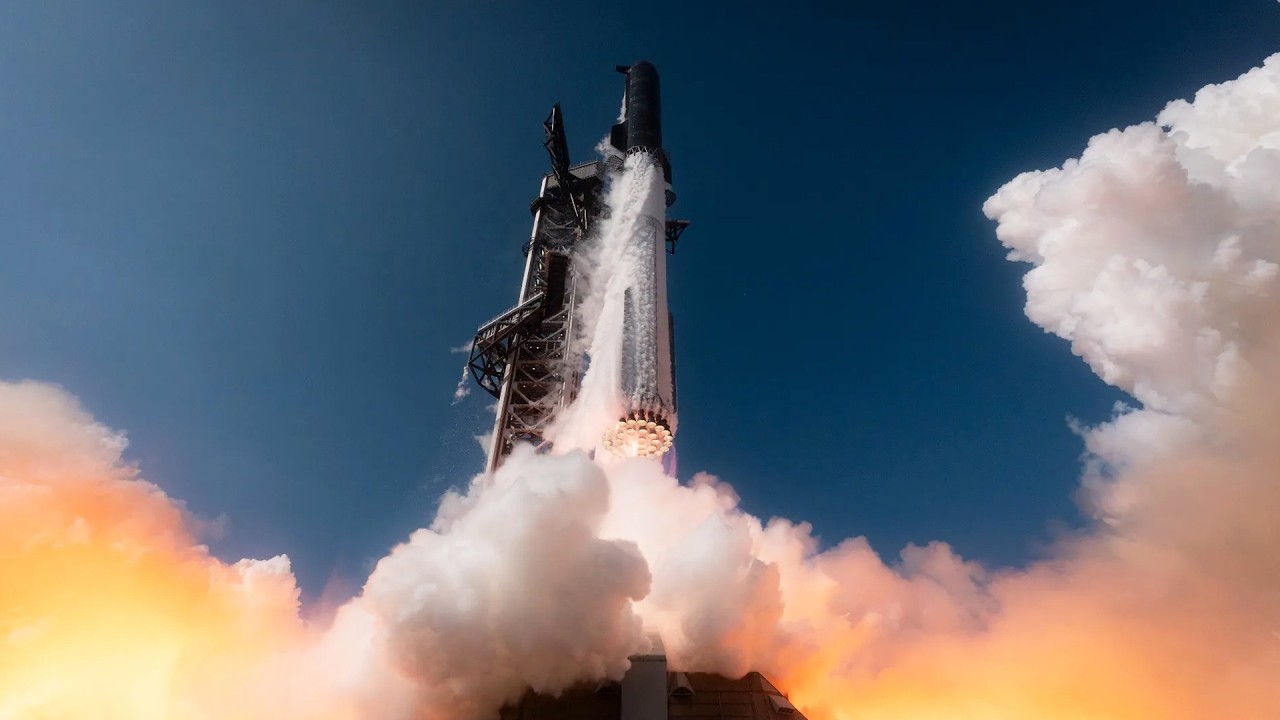
Starship is the biggest and most powerful rocket ever built, standing a towering 407 feet (124 meters) tall when fully stacked. Both of its stages — the Super Heavy booster and Ship upper-stage spacecraft — are designed to be fully and rapidly reusable, a breakthrough that SpaceX has called the "holy grail of rocketry."
The company believes that Starship will open the heavens like never before, allowing humanity to settle the moon and Mars, and perhaps venture even farther afield. But the rocket is not yet ready for such world-changing work; it's still in the flight-test phase.
Starship debuted in April 2023 and now has 13 missions under its belt, all of them suborbital. That figures to change on Monday, however, when the giant vehicle launches for the 14th time.

Flight 14 will send the 171-foot-tall (52 m) Ship to Earth orbit, where it will deploy 26 of SpaceX's next-gen Starlink Version 3 internet satellites. These will be the first members of a new megaconstellation in low Earth orbit (LEO), which Elon Musk has said will eventually consist of 100,000 spacecraft. (SpaceX currently operates about 11,000 Starlink satellites in LEO).
Ship will circle our planet six times, then head home for a splashdown in the Pacific Ocean of the coast of Chile nearly 10 hours after launch. This will be quite a departure from Starship's suborbital flights, which lasted a maximum of 65 minutes and targeted the Indian Ocean, off the coast of Western Australia.
Super Heavy won't stay up for nearly so long; it's scheduled to splash down in the Gulf of Mexico about seven minutes after liftoff, as it has on previous flights.
During operational flights, SpaceX plans to bring both Super Heavy and Ship back to the launch pad, where they'll be caught by the tower's "chopstick" arms. The company has already done this three times with Super Heavy but has not yet attempted it with Ship.
That box will be checked on another flight. And Starship will have other hurdles to clear as well, even if today's flight goes perfectly. For example, each Starship mission beyond Earth orbit will require multiple rendezvous with "tanker" Ships to fuel up the voyaging spacecraft. SpaceX has yet to demonstrate off-Earth propellant transfer, so we will doubtless see that milestone on an upcoming test flight.
Ship will also have to be outfitted with a life-support system ahead of crewed missions, which could be coming relatively soon. For example, NASA picked Ship to the be the first crewed lunar lander for its Artemis program, which aims to land people on the moon for the first time in 2028 on the Artemis IV mission.