





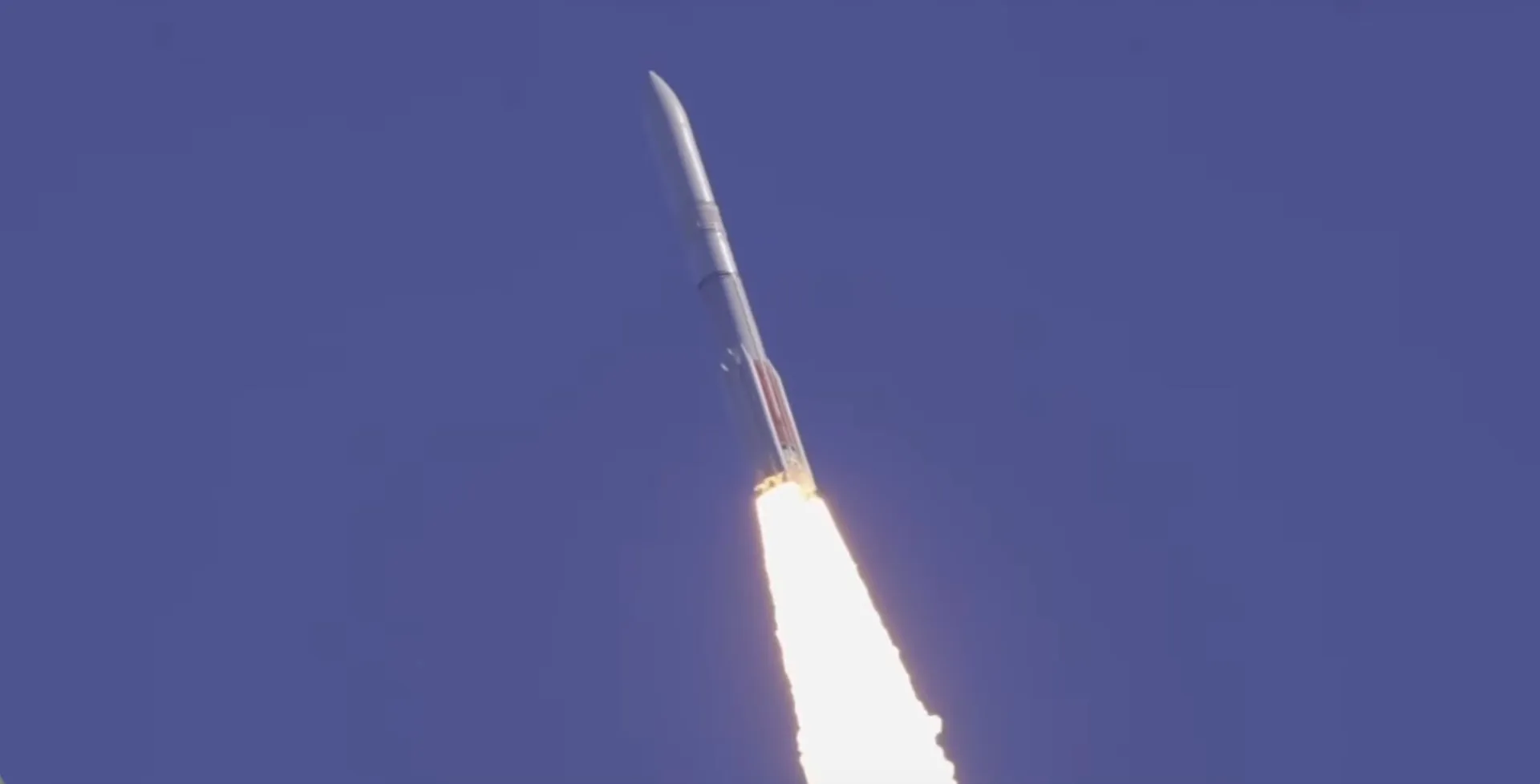
The failure of a Vulcan Centaur rocket carrying a full load of internet satellites for Amazon was caused by an anomaly in its first-stage booster, rocket maker United Launch Alliance said today (Nov. 17).
That failure — which led to the loss of 40 Amazon Leo internet satellites — was recognized about 10 minutes after liftoff, but the problems began much earlier than that, ULA said in a statement.
"While we appear to have lost telemetry and the mission at approximately 10 minutes into flight, early indications are that just after liftoff the launch vehicle experienced low booster performance, resulting in stage separation occurring when the vehicle was low in altitude and below minimal velocity to reach orbit," ULA wrote in today's update.
The two-stage Vulcan Centaur is the successor to ULA's workhorse Atlas V rocket, which will retire after just six more flights. Vulcan debuted in January 2024 and now has a total of five launches under its belt.
The new rocket has experienced problems on three of those missions. On both its second and fourth flights — which launched in October 2024 and February of this year, respectively — the nozzle of one of Vulcan's strap-on solid rocket boosters (SRBs) fell off about 30 seconds after liftoff.
On both occasions, the rocket overcame the problem and successfully delivered its payloads to orbit. However, after the second occurrence, the U.S. Space Force paused national-security launches with Vulcan until ULA addressed the SRB nozzle issue. (The February 2026 flight was a Space Force mission.)
That work led to "design and process improvements to the nozzle," ULA said in an Oct. 28 update. And those tweaks apparently worked.
"All indications are that the solid rocket booster performance was nominal, following nozzle improvements implemented for this launch," the company wrote in today's update.
Vulcan's Centaur V upper stage, which features two RL-10C engines, did its job as well "but was unable to recover from the [booster] performance loss, resulting in loss of mission," ULA added.
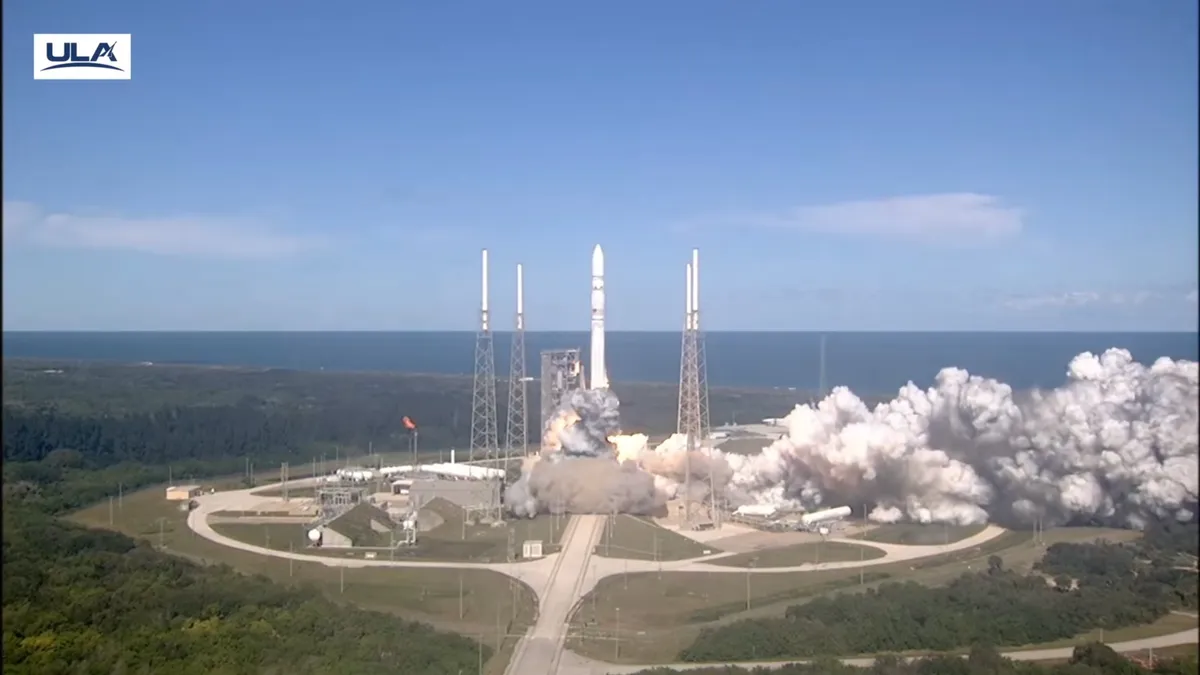
Vulcan's first-stage booster is powered by two BE-4 engines, which are built by Amazon founder Jeff Bezos' Blue Origin. Today's update did not identify the exact problem with the booster; doing so will require more time, as the investigation has just begun.
If that investigation finds a serious issue with the BE-4, there could be broad ripple effects across the American space program. After all, that engine also powers the first stage of Blue Origin's New Glenn rocket, which is a key piece of hardware for NASA's Artemis program of moon exploration. (And New Glenn is currently recovering from a failure of its own — a massive explosion on the test stand that occurred on May 28.)
NASA plans to integrate the Centaur V upper stage into its Space Launch System moon rocket, the vehicle that launches Artemis astronauts to space. So the fact that the Centaur performed nominally on Sunday is a bit of good news for the space agency.
Vulcan's grounding is a big deal, no matter what the anomaly investigation ends up finding. The U.S. doesn't have a surfeit of powerful rockets, after all, and two of them — Vulcan and New Glenn — are out of commission at the moment.
There's considerable pressure on both Vulcan and New Glenn to bounce back strong, for the nation faces an impending launch crunch in the next few years. SpaceX plans to retire its Falcon 9 and Falcon Heavy rockets and shift its launch load over to the fully reusable Starship megarocket. SpaceX is expected to prioritize its own needs in Starship's early days, using the vehicle primarily to build out its next-gen Starlink broadband constellation and Starmind AI data center network.
The Vulcan failure also impacts Amazon — specifically, the company's plan to build out Amazon Leo, which will compete with SpaceX's Starlink. Amazon has booked about 100 launches on a variety of rockets to build its constellation, which will eventually consist of more than 3,200 satellites. Thirty-eight of those bookings are for Vulcan; Sunday's launch was the first of those.
The other rockets Amazon has booked are the Atlas V, New Glenn, Falcon 9 and Arianespace's Ariane 6. About 400 operational Amazon Leo satellites have reached orbit to date across 14 launches (not including Sunday's failure).