




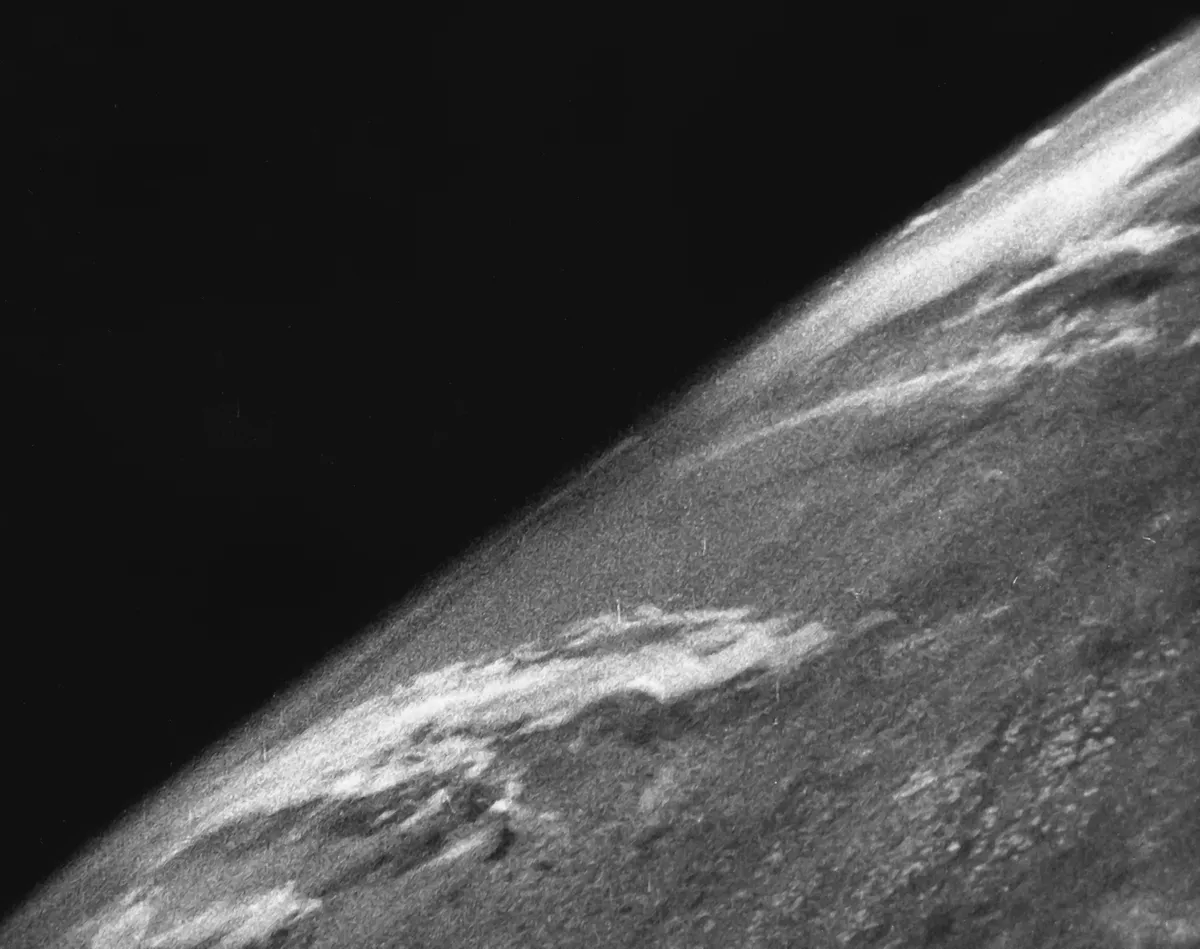
On October 24, 1946, a V-2 rocket captured the first-ever photo of Earth from space.
While these grainy, black-and-white images might not look like much today, they were a huge deal at the time, because no one had ever seen Earth from space before.
The V-2 rocket launched from the White Sands Missile Range in New Mexico. It carried a 35-millimeter motion picture camera that captured a new frame every second and a half. The rocket soared to an altitude of about 65 miles before falling back to Earth.
Both the rocket and the camera were destroyed after crashing into the Earth at a speed of about 340 miles per hour. But the film survived because it was protected inside a steel case. Scientists had to drive out into the New Mexico desert to retrieve the film. When they saw the images for the first time, the scientists were literally jumping up and down with joy.
How it mattered
The ability to photograph Earth from space drove both an expanded interest to continue pushing into space and led to unexpected societal changes with regards to how humanity considered its home planet.
For military and intelligence agencies, the potential now existed for reconnaissance at a far larger scale than what was possible with high-altitude aircraft. That capability expanded to agriculture and meteorological purposes, eventually making Earth observation one of the most common reasons satellites and space stations are deployed into orbit today.
Earth photography from space also gave birth to the environmental movement, as people began to see the planet differently. The fragility of this orb became more apparent, as now Earth appeared a "blue marble" set against an endless black void.
Want more space history? Check out our full On This Day In Space Story archive and watch our On This Day In Space videos on YouTube.